The platform
A governed decisioning layer, not another board portal.
Boardverse is a workflow, decision and evidence platform for boards and executive teams adopting AI under real scrutiny.
Anything an AI agent writes to a governance record is provisional until a different named person confirms it. Every confirmation is written to an immutable audit trail.
Enforcement
Nine things the platform will not let you skip.
Segregation of duties, five modules deep
Risk register, financial packs, board actions, resolutions and financial snapshots each gate a token-submitted record behind a Founder confirm that the submitter cannot perform themselves. The rule is enforced server-side, not hidden in the interface.
Founder is the platform's senior role. In a company its management team has bought, the chief executive or managing director usually holds it.
Dual sign-off with content integrity
A resolution needs a Chair and a Founder, two different people. If the text changes between the two signatures, the first signature is invalidated automatically. A signature can never be claimed against text that later changed.
Threshold-based risk escalation
Severity is computed server-side, never client-submitted, and recomputed from impact and likelihood on every save. Crossing the organisation's threshold fires an audit-logged escalation to Founder and COO, by email and in-app.
Variance-linked financial packs
A material variance blocks submission until it is tied to a real board action or resolution. Once approved, a pack is immutable and supersede-only.
Upload the budget the board approved. Financial Review opens with where the business stands against it, showing only the lines outside your tolerance, each marked Adverse or Favourable. A budget counts once a Founder other than the uploader confirms it.
Ask Poseidon
A weekly synthesis grounded in live governance data, with a source citation on every claim. Ask it about the board papers themselves and the answer cites the page it came from. It runs on the model you choose (Claude, OpenAI, Azure OpenAI or Gemini) with your organisation's own key.
Decisions on the record
A material decision is one record: the question, two to six options, the reasons, who decides and the date to check the outcome. Propose one from any record with Decide on this. Once decided it is never edited; a later decision replaces it, and a different Founder confirms each one.
When the board proposes a decision, Boardverse shows earlier decisions on the same question and how they turned out. After a decision, a one-tap outcome check records whether it worked, and owners are reminded when one is due.
Agents work within the board's rules
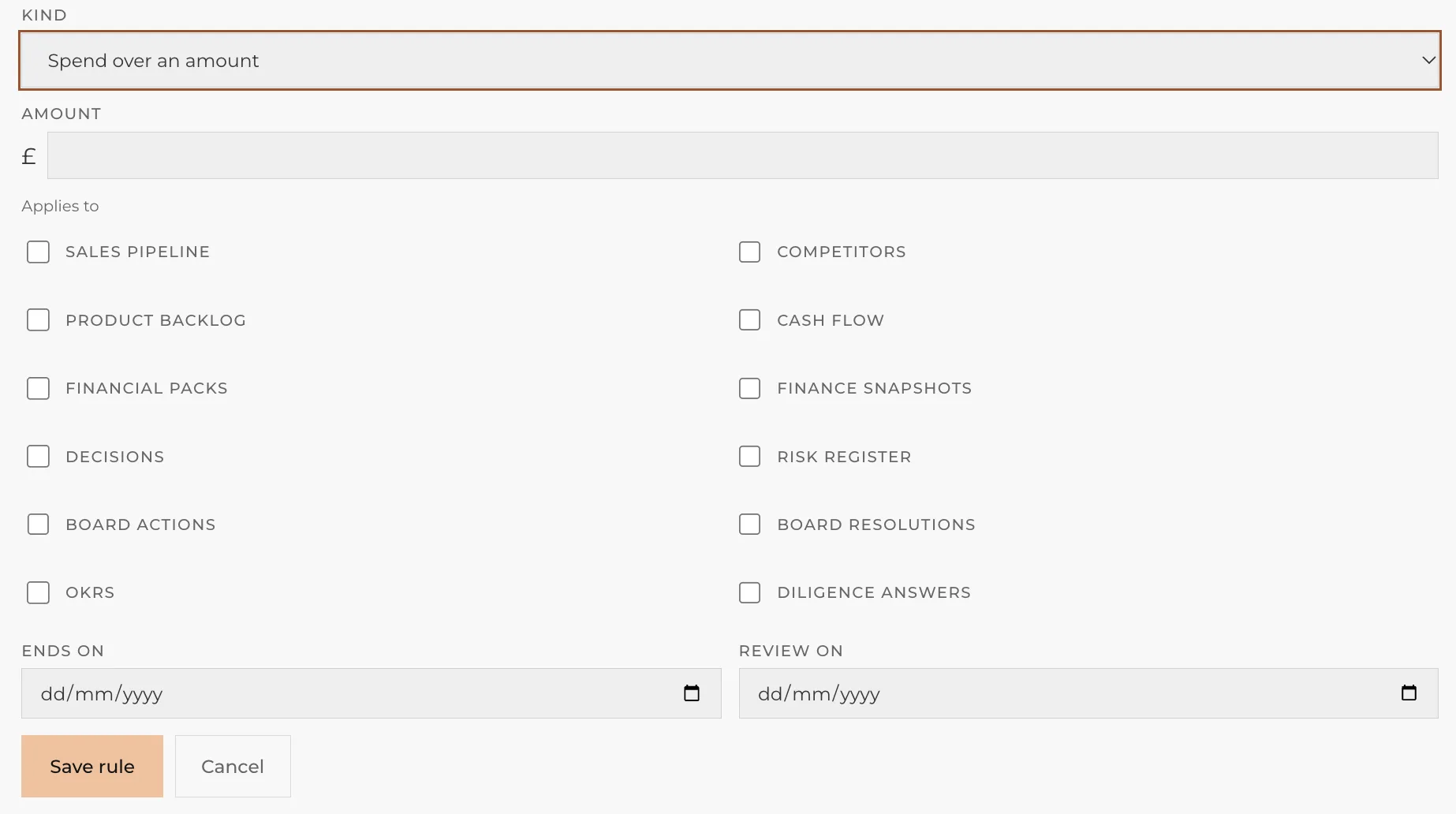
A confirmed decision can become a rule your AI agents work within: a spending limit, a hiring freeze, a supplier to avoid. Anything an agent submits against the rule waits for a senior leader, with the rule named.
Agents can read the rules in force. They can never add, change or lift one, or approve what a rule holds.
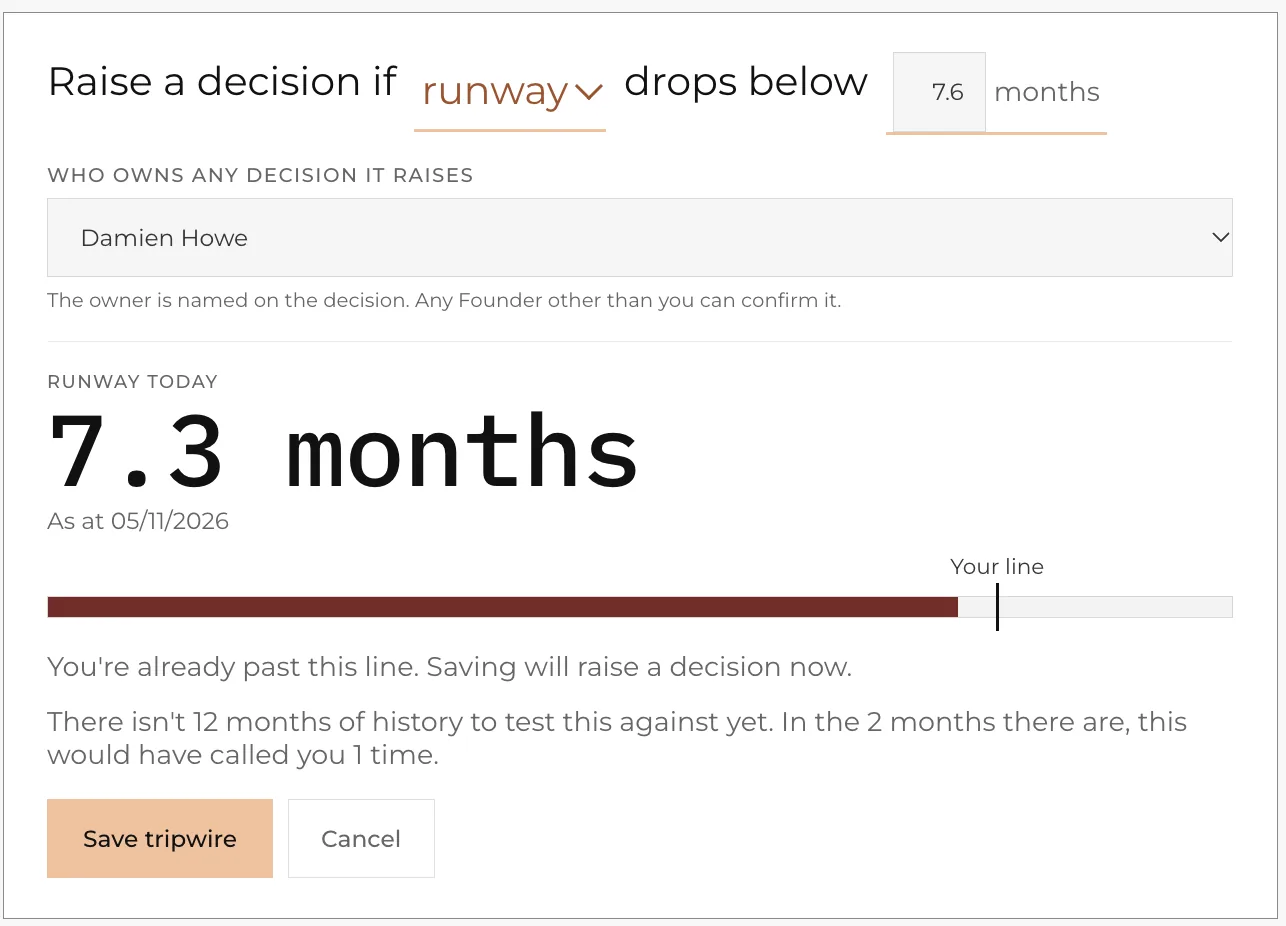
Tripwires bring the board in
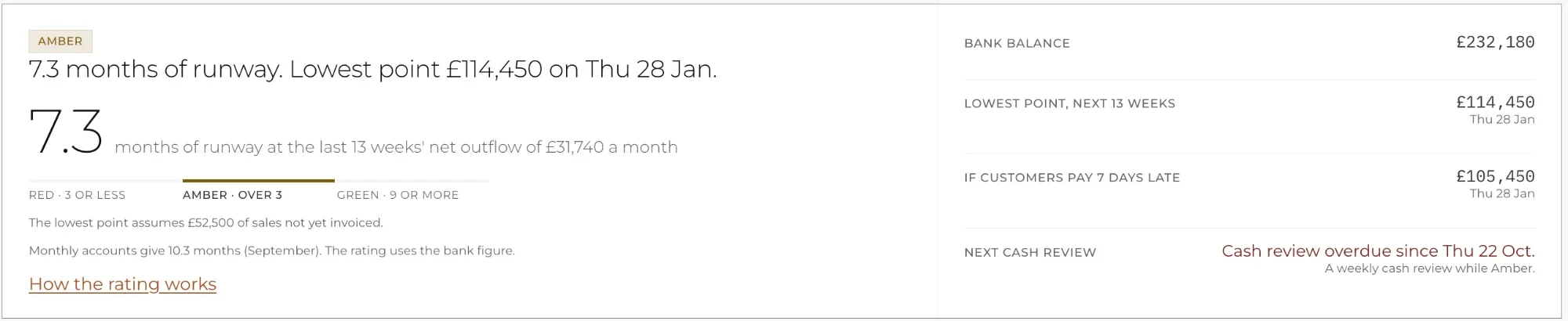
A senior leader writes the line in one sentence: runway, the lowest cash day, a key result or a risk score. When it is crossed, a decision is raised with the evidence and the board's earlier decisions on the same question. A different senior leader confirms it.
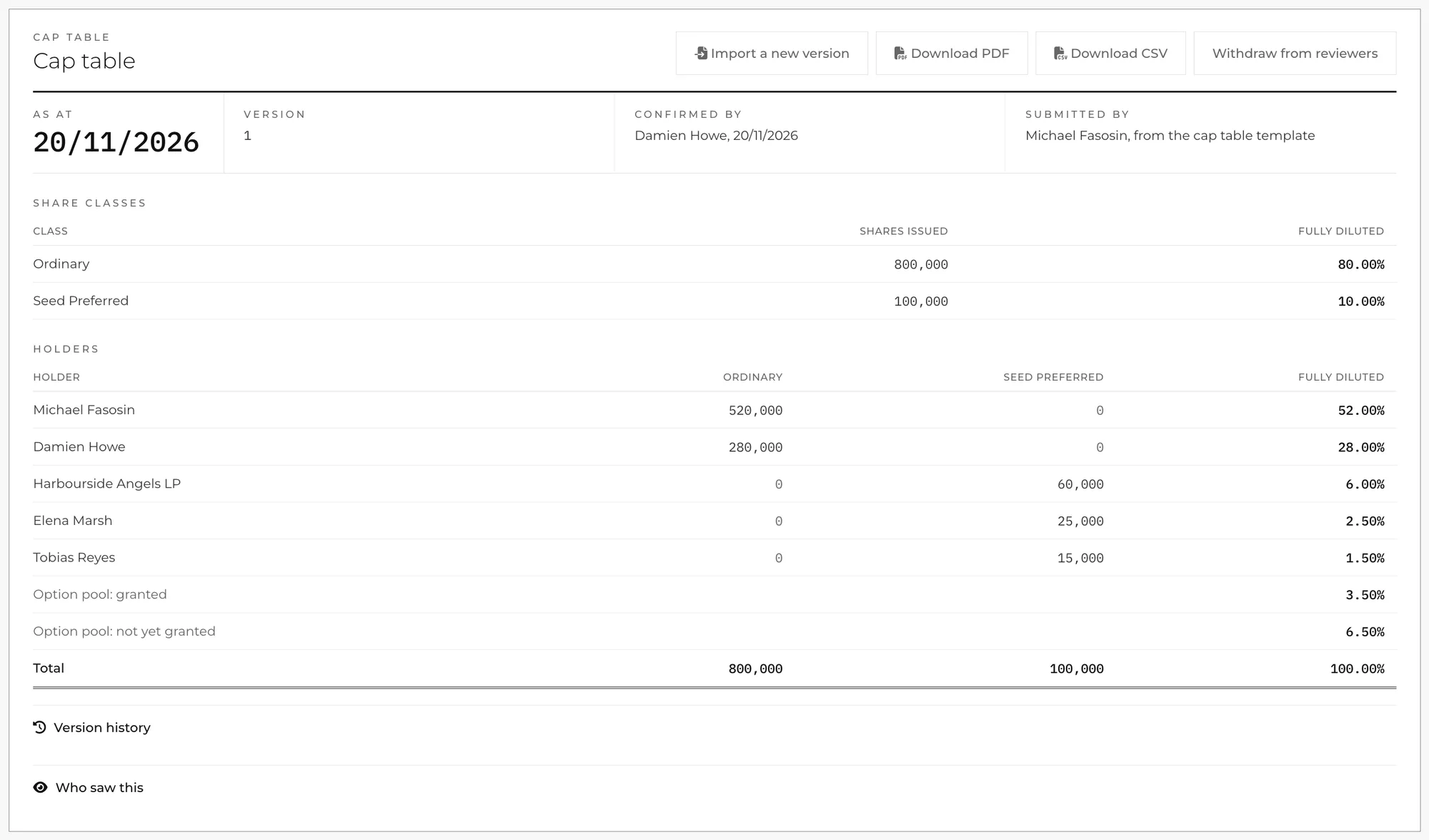
The cap table, confirmed by a second founder or the chair
Import it from the Boardverse template, or from a Carta, SeedLegals or Vestd CSV export. A Founder or the chair confirms each version before anyone else sees it. It shows share classes, holders, the option pool, granted and not yet granted, and fully diluted percentages, with every earlier version and who saw it.
When the board approves a resolution that changes who owns what, the cap table is flagged as possibly out of date. It stays flagged until someone imports a new version or confirms there is no change to holdings. Agents can read the confirmed version. One an agent submits waits for a Founder or the chair. Addresses are never imported.
The board meeting
One board meeting, from the invite to the signed minutes.
When a buyer asks how a resolution was passed, the answer should already be on file: who was invited, whether the board was quorate, what was said and who signed.
Before the meeting
Set the time and choose who attends. Each director gets an invite with the join link in their own calendar and replies Yes, No or Maybe in one tap; guests from outside the board are invited without access to Boardverse.
A date change or cancellation made after the invites went out, by someone other than the person who scheduled it, waits for a Founder or the chair to confirm and send it.
Every agenda item links to the risks, resolutions, actions, deals and key results it covers, and you can see which directors have opened each paper before you start.
In the room
Roll call shows a live quorum bar. A resolution taken while the board was not quorate cannot be signed off at that meeting.
After the meeting
Upload the transcript and Boardverse drafts the minutes under each agenda item, with every point cited to the moment it was said. The minutes count only once a second person has confirmed them.
Or let it arrive on its own: connect a Granola folder, or pass your note-taker's transcript through your own AI agent, and Boardverse matches it to the meeting and removes anything said in camera before it drafts.
Between meetings
Pass a resolution in writing. Every voting director signs from their phone in one tap, Founders see who has still to sign, and a resolution not signed within 28 days lapses.
When an investor asks
Answers to a diligence questionnaire are drafted from the Data Room, each one cited, and released only after a second person approves it. Outside reviewers see confirmed documents only, and every file they download carries their name, email address, the date and a copy reference, so a Founder can trace any copy that leaves.
A Founder can move a document or withdraw it, and a withdrawn document disappears from outside reviewers, search and downloads. While a correction waits for review, reviewers, search and Ask Poseidon keep seeing the confirmed version.
Each item carries a title, a period and an account, and many files go up at once. Financials folders are counted by period, so the missing months or years are named. Files up to 25 MB upload.
Activity, Reads shows a Founder every Data Room search, Ask Poseidon answer and marked copy, each filterable. Any list exports as CSV. Search words are kept for 90 days.
The modules
Twenty-three modules in one governed record.
Grouped as the platform presents them. Every record shows what it is connected to and each approved version before the current one.
The Dashboard lists what needs you: decisions to confirm, tripwires crossed, papers to sign, overdue actions, held agent submissions and the cap table. Each figure links to the records it counts. If something cannot be checked, it says so. A tile your role may not see is removed, not shown as zero.
Overview
Governance
Operations
Growth
Account
Security
Passkey and MFA as standard. Module-scoped access tokens, access-logged.
A passkey added to an account that already has one waits for the second step, and every new passkey is announced to its owner and every Founder. Set one up on any device, or use your phone where the device cannot hold one.
A new email address is confirmed only from the new inbox, so the Founder who asked for the change cannot confirm it. A change of role takes effect on the person's next request. No Boardverse page can be shown inside another site's frame.
Platform questions
What is the confirmation gate?
The rule that nothing a connected tool submits to a governance record becomes official until a person who did not submit it says so. A pending record is confirmed or rejected in its own row, the submitter can never confirm their own entry, even after renaming themselves, and the rule is enforced server-side, not hidden in the interface.
How does dual sign-off prevent backdating?
A resolution needs a Chair signature and a Founder signature from two different people. If the text changes between the two signatures, the first signature is invalidated automatically, so a signature can never be claimed against text that later changed.
Is risk severity client-submitted?
No. Severity is computed server-side, never client-submitted, and recomputed from impact and likelihood on every save. Crossing the organisation's threshold fires an audit-logged escalation to Founder and COO, by email and in-app.
What happens to a financial pack after approval?
A material variance blocks submission until it is tied to a real board action or resolution. Once approved, a pack is immutable and supersede-only.
Which modules are covered?
Twenty-three, in five groups. Overview: Dashboard and Ask Poseidon. Governance: Decisions, Board Portal, Resolutions, Guardrails, Risk Register, Board Calendar, Documents and Data Room. Operations: Action Log, OKRs, Financial Review and Leadership Team.
Growth: Campaigns, Clients, Engagements, Product Backlog, Pipeline, Fundraising, Competitive Intel and Customer Reviews. Account: Activity.
Can people on the same board read the record in different languages?
Yes. Language and currency are settings on the person, not the organisation. A chair reading in German and a CFO reading in French are looking at one record, not two translations of it. English, French, German and Spanish ship with the platform.
Which currencies are supported, and where do the rates come from?
Thirty. Conversion uses European Central Bank reference rates retrieved through Frankfurter. The rate applied and the date it was taken are recorded against the figure, so a converted number can be checked later rather than taken on trust.
Does Ask Poseidon answer in my language?
Yes. The language you set is held server-side and passed to the model with your question, so the answer comes back in your language, from the same governed record and with the same citations as everyone else's.
Language and currency
One governed record, read in the language and currency each person chose.
Language and currency are settings on the person, not on the organisation. A chair in Frankfurt reads the board pack in German with euro figures. The CFO in Paris reads the same record in French. An investor in New York reads it in English with dollars. Nobody reconciles three versions, because there is one record underneath.
Four languages ship with the platform: English, French, German and Spanish. Thirty currencies are supported, converted against European Central Bank reference rates through Frankfurter, with the rate applied and the date it was taken recorded against the figure rather than converted silently.
Ask Poseidon answers in the language the reader set. The setting is held server-side and passed to the model with the question, so the answer arrives in French for the CFO and German for the chair, from the same governed record and the same citations.