A runway of 7.3 months is not an emergency. Six months is. The trouble is that nobody announces the week runway crosses from one to the other. It shows up in a board pack a month later, as a number someone has to explain.
This week we released three things that close that gap, and they share one idea. The board decides where the lines are. The software watches them. People still make the call.
In Start your AI operating system at the board we showed how Boardverse already works as an AI operating system for the board. This week adds two things to it: the board steps in when the numbers say so, not when the next meeting comes round, and the board sets what agents may do on their own.
In Boardverse, the people who set these lines and confirm what they raise hold its senior role. In most companies that is the owner, the chief executive or the managing director, and often more than one person on the leadership team.
Cash flow, thirteen weeks ahead
Financial Review now has a Cash flow tab beside profit and loss. It forecasts thirteen weeks by day, rates runway red, amber or green from actual bank movement, and shows who owes you and who you owe, aged, with a way to chase. The rating sets how often the forecast should be reviewed.
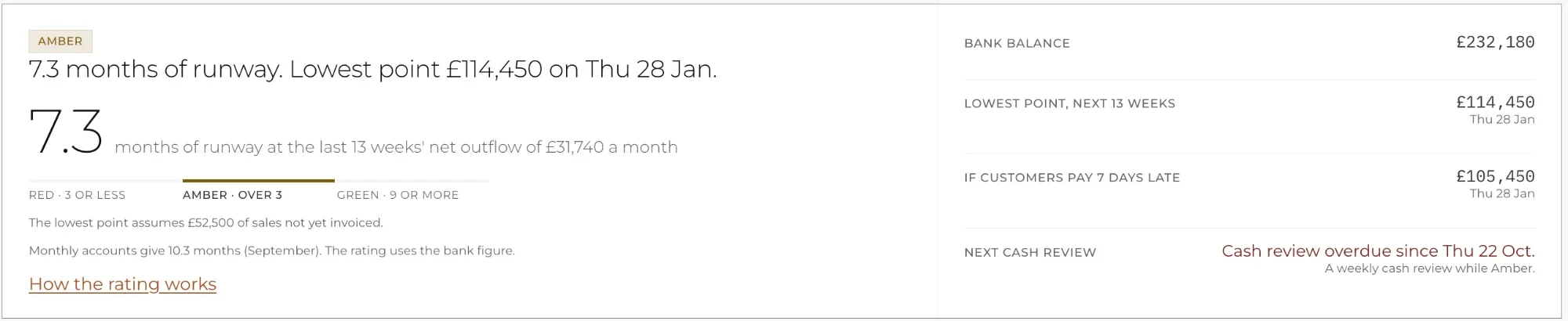
Positions arrive by uploading a template, from a computer or a phone, or from your own AI agent. Either way, they wait for a second senior leader to confirm them before they count. Ask Poseidon cites the cash line when it answers a question about cash.
A senior leader switches it on in Settings. Until then it stays off.
Tripwires: say when the board should step in
A senior leader writes the line in one sentence. "Call the board if runway drops below 6 months." Boardverse shows today's value, the room to spare, and how often that line would have fired over the last twelve months.
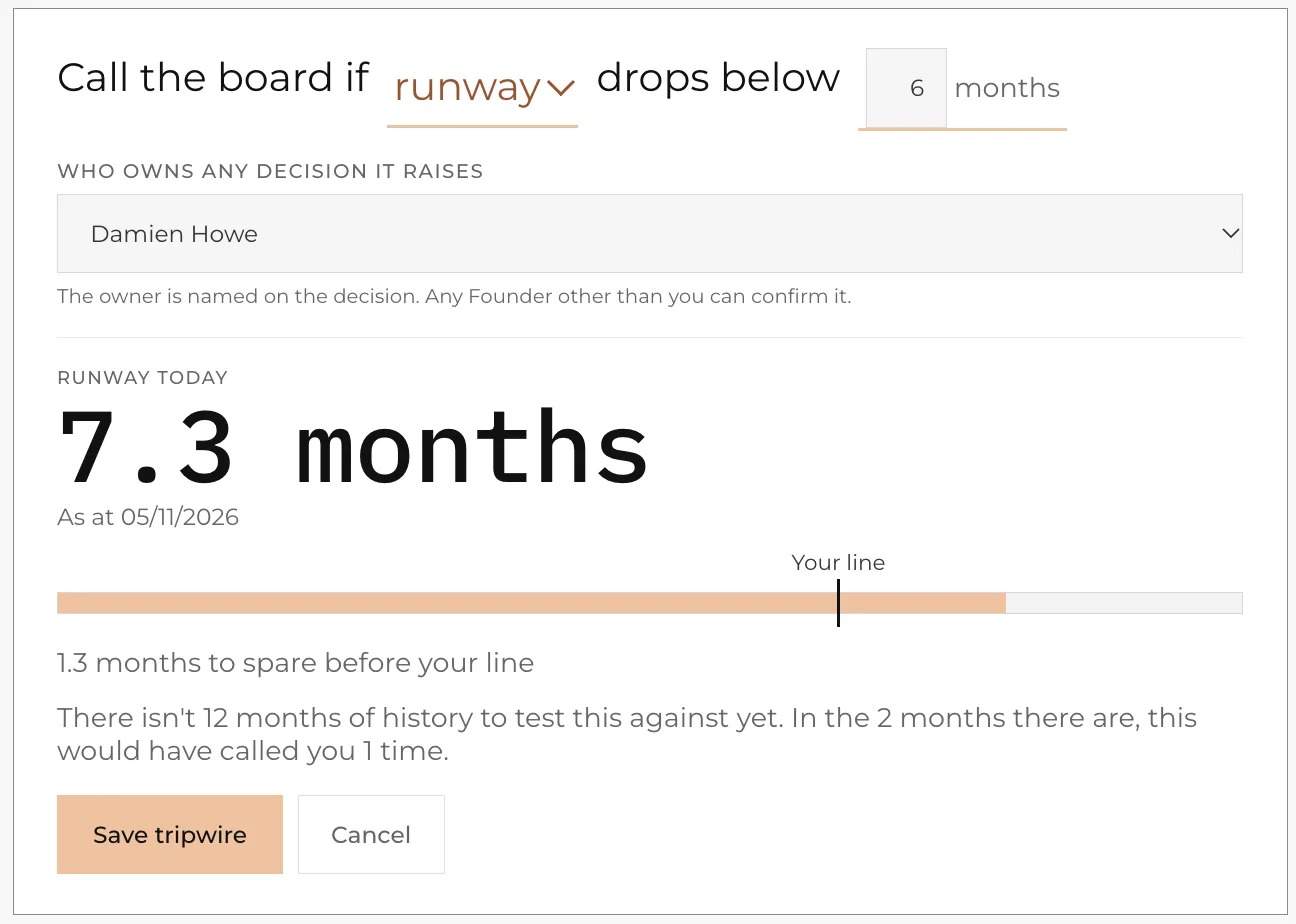
There are four lines you can draw today: runway, cash on the lowest day of the forecast, a key result that has gone off track, and a risk scored at or above a level you choose.
When a line is crossed, Boardverse raises a decision with the evidence beside it and the board's earlier decisions on the same question. If the workspace has its own AI model key, it suggests two or three options. The senior leaders hear about it in the app and by email. One other than the person who set the tripwire confirms the decision.
It reads figures the workspace already shows. It does not predict.
Guardrails: a decision becomes a rule
A confirmed board decision or an approved resolution can carry a rule for your AI agents. Spend above an amount. A hiring freeze. A named supplier or counterparty. A module agents may not touch. Or guidance written in plain words.
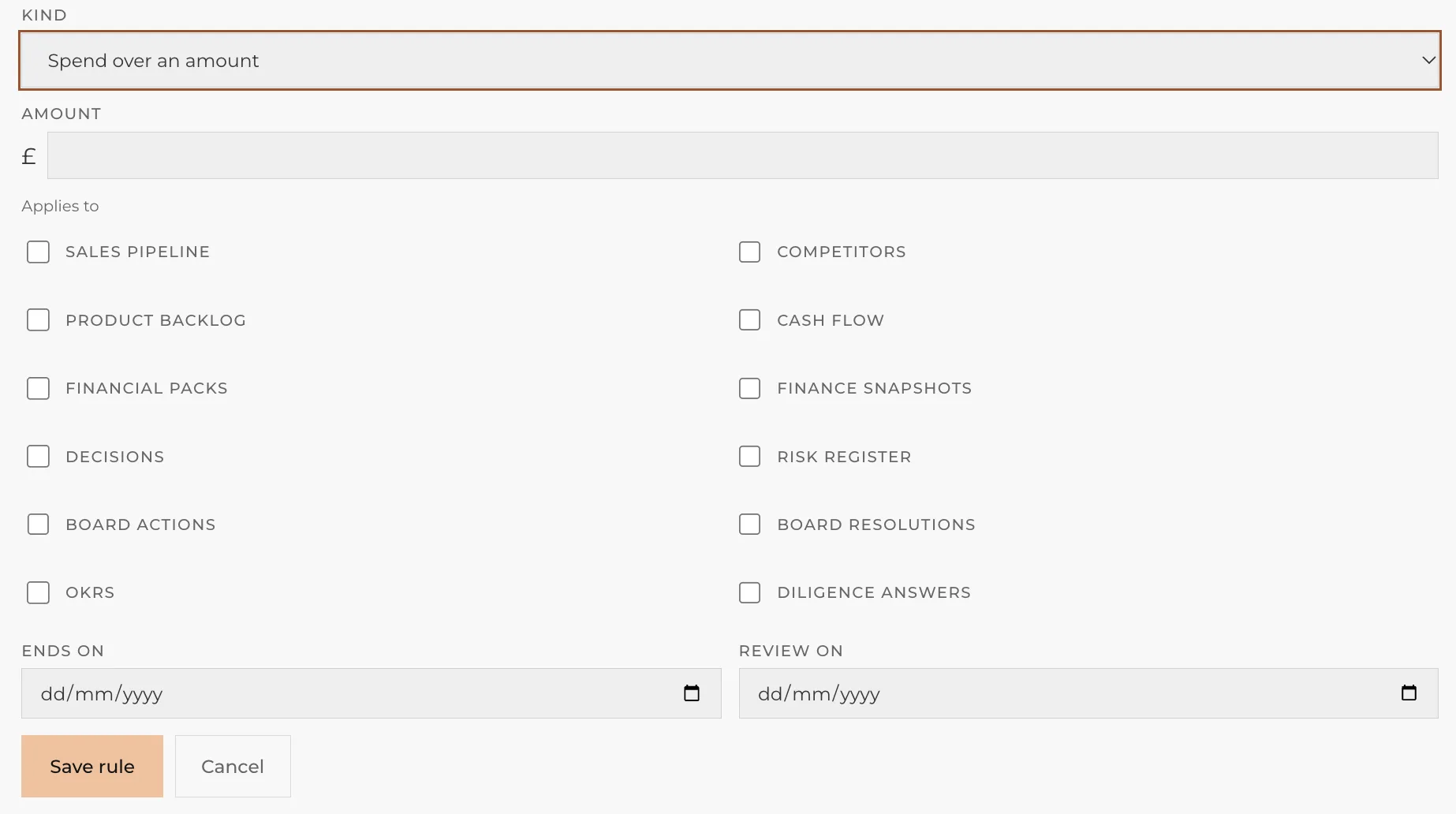
When an agent submits something that conflicts with a rule, it is held for a senior leader, with the rule named on it. That holds even in modules where agents normally file straight away, such as the sales pipeline.
Agents can read the rules in force. They cannot add, change or lift one, and they cannot approve what a rule has held. Every rule ends, or comes up for review, within twelve months.
A guardrail adds a person to the path. It never refuses or files anything on its own. Guidance written in plain words is read by agents, not checked by Boardverse. And it applies to what agents submit, not to what people type into the app.
Why this matters now
Owners are now asked who let their AI do what, and on whose authority. A buyer's diligence team, a lender or a regulator will ask.
When the answer is a confirmed decision, a rule with a review date and a named leader who approved what the agent proposed, you have an answer you can show.
The board still decides. Boardverse makes sure it knows when it needs to.
Check out Boardverse, or start with the five-answer diagnostic.